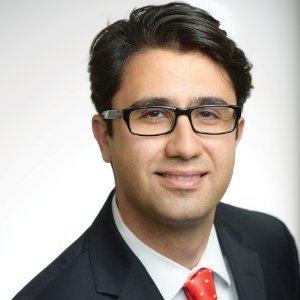
Sina Azodi


Dr. Sina Azodi is the Director of the Master’s Program in Middle East Studies (MES) at George Washington University’s Elliott School of International Affairs, where he is frequently presented in Western media as an expert on Iran. His public commentary and institutional role have become the focus of growing concern among scholars, journalists, human rights advocates, and Iranian civil society, who argue that his analyses consistently echo and normalize key narratives of the Islamic Republic.
Critics point out that Azodi’s framing of Iran’s nuclear program often starts the historical story at the Iran–Iraq War, portraying the regime as primarily defensive, while omitting core elements of its record: the 1979 U.S. embassy hostage crisis, decades of “Death to America/Israel” rhetoric, an explicit project to export revolutionary ideology, and the broader pattern of regional destabilization. They also note that his public analysis tends to downplay Iran’s enrichment of uranium to 60%, a level far beyond civilian needs and alarmingly close to weapons grade capability, thereby minimizing the regime’s nuclear ambitions in ways that align with official talking points from Tehran.
Beyond his analytical framing, Azodi’s conduct in public debate has raised additional red flags. In a widely viewed interview with VOA Persian journalist Mahtab Vahidi Rad, he responded to critical questioning not with evidence but with disparaging remarks, telling her to “stop saying wrong things” and claiming she was “not a journalist,” behavior that petitioners say is inconsistent with the professional standards expected of a university affiliated scholar. In other comments, he has suggested that states commonly respond to perceived threats by using lethal force against protesters, language that, in the eyes of many Iranians, serves to normalize the Islamic Republic’s violent suppression of peaceful dissent.
These concerns come on top of earlier controversies regarding his speaker choices, institutional alliances, and treatment of victims of state violence, patterns that, taken together, have led many activists and victims’ families to describe him as a de facto apologist for the Islamic Republic within Western academic and policy spaces. Petitioners have also highlighted the relatively thin academic publication record behind his rapid elevation as a media expert, and have drawn attention to a 2008 prostitution related misdemeanor conviction in Fairfax County, Virginia, as raising further questions about his judgment in a position of influence over students.
As a result, multiple letters and petitions have called on George Washington University to launch an independent investigation into Azodi’s hiring and promotion, his public conduct, the standards by which he is promoted as a media authority on Iran, and the funding and external partnerships surrounding the Elliott School’s Middle East programs. Until those questions are addressed transparently, his role continues to symbolize, for many in the Iranian diaspora, the entrenchment of regime friendly narratives under the cover of expert analysis in Western institutions