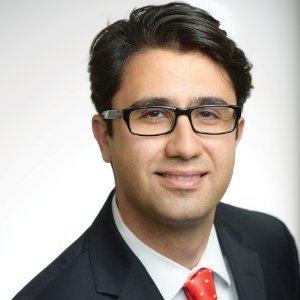
Ali Akbar Mousavi Khoeini

Ali Akbar Mousavi Khoeini is an Iranian politician, activist, and academic who presents himself as a reformist but has garnered significant controversy for his role in maintaining the Islamic Republic of Iran’s (IRI) power structure, despite promoting reformist rhetoric. Currently based in the U.S., Mousavi serves as a Senior Advisor and Postdoctoral Research Fellow at the Center for Regional Development and Conflict Resolution (CRDC), where his focus is on “peace tech”—the use of information and communication technologies (ICT) to promote peace, stability, and conflict resolution. Despite this outward emphasis on peacebuilding, critics argue that Mousavi’s actions serve more to protect the IRI’s interests than to challenge its authoritarian rule or support the Iranian people’s fight for freedom.
Mousavi has held numerous prestigious fellowships at academic institutions such as Stanford University, the University of Maryland, and Virginia Tech. He has also appeared on panels and lectures at institutions like George Washington University and American University. He frequently appears on major media outlets, including BBC, Al Jazeera, NPR, CNN, and Voice of America. These activities have allowed him to be significant in diplomatic and policy circles.
During his tenure as a member of Iran’s 6th Parliament, Mousavi was involved in various initiatives related to technology and prison oversight, positions that at the time bolstered his reformist credentials. He was also briefly imprisoned in 2006 for participating in a women’s rights protest in Tehran, which further added to his image as a reformist. However, critics argue that this reformist image is more performative than substantive, as Mousavi continues to engage with the regime in ways that ultimately preserve its power rather than dismantle the oppressive structures it upholds.
His involvement in U.S.-based academic and diplomatic efforts, such as advocating for the nuclear deal between Iran and the P5+1 during the Obama administration, has raised concerns about his true allegiances. Critics accuse Mousavi of promoting policies that align with the IRI’s objectives, particularly in terms of maintaining its nuclear program while sidestepping accountability for its human rights abuses and regional destabilization efforts. By engaging in Track II diplomacy and promoting the nuclear deal, Mousavi’s actions have been perceived as serving the interests of the IRI rather than those of the Iranian people, who continue to suffer under a brutal and repressive regime.
Mousavi’s work in the U.S. includes his advocacy for “peace tech.” Still, this focus on technological solutions to conflict fails to address the deeper issues of political repression, human rights violations, and gender apartheid perpetrated by the Iranian regime. Mousavi’s engagement in the U.S. academic and diplomatic spaces effectively whitewashes the regime’s crimes and provides it with a veneer of legitimacy in international circles. By positioning himself as a reformist and peacebuilder, Mousavi creates the impression of advocating for change while ultimately protecting the regime from more severe international scrutiny or meaningful internal reform.
While Mousavi’s background in technology and his involvement in global discussions on conflict resolution may appear constructive, his actions preserve the status quo in Iran. His career trajectory reflects a broader issue within the Iranian reformist movement, where individuals claim to push for change but remain fundamentally tied to the regime’s survival. By focusing on limited reforms and engagement, Mousavi’s actions fail to address the core demands of the Iranian people, who are calling for justice, freedom, and the complete dismantling of the oppressive system that has ruled Iran for over four decades.