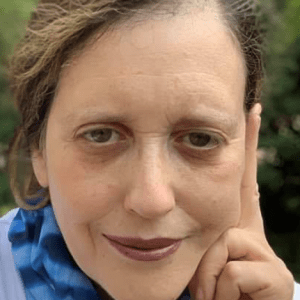
Shirin Saeidi

AAIRIA’s campaign against Dr. Shirin Saeidi began in March 2025, when we wrote to the University of Arkansas seeking clarification after Dr. Saeidi submitted a letter to the Swedish Court of Appeal in support of Hamid Nouri, in which she questioned well-established evidence surrounding the 1988 massacre of Iranian political prisoners, including Ayatollah Khomeini’s fatwa ordering the executions. Our initial request was simple: we asked whether Dr. Saeidi’s statements represented the official position of the University. That inquiry led to months of research, documentation, Freedom of Information Act requests, and sustained advocacy. The campaign ultimately resulted in Dr. Saeidi’s removal as Director of the King Fahd Center for Middle East Studies, the revocation of her tenured faculty appointment by the University of Arkansas, and formal investigations by both Cambridge University into her doctoral dissertation and Cambridge University Press into her book. We believe this campaign demonstrates that careful documentation, persistence, and factual advocacy can persuade even the world’s most prestigious institutions to uphold their own standards of academic integrity and accountability.
Current status
Shirin Saeidi is an Iran-born political scientist who immigrated to the United States as a child and later built an academic career focused on Iran, political violence, citizenship, and memory politics.
In May 2026, the University of Arkansas Board of Trustees upheld the decision to terminate Saeidi from her tenured faculty position after earlier actions had already removed her from her role as Director of the King Fahd Center for Middle East Studies. Public reporting described the university process as involving concerns related to social media activity, conduct, and institutional matters that were raised during the review.
Academic background
Saeidi earned her Ph.D. in Politics and International Studies from the University of Cambridge.
She joined the University of Arkansas in 2020 as an associate professor of political science and later became Director of the King Fahd Center for Middle East Studies, becoming the first woman to lead the program.
Her academic work focused on:
- State formation in post-1979 Iran
- Political violence
- Citizenship
- Gender and social movements
- Political prisoners and memory politics
Long-term engagement with Iran
Saeidi has publicly described conducting more than a decade of fieldwork inside Iran and has stated that she interviewed Iranian officials, former political prisoners, activists, and others.
She also reported spending several years living and teaching in Iran between approximately 2012 and 2018.
Critics have raised concerns regarding the institutional context in which this research was conducted. According to complaints submitted by AAIRIA and former political prisoners, aspects of her work in Iran involved support or facilitation through institutions operating under the supervision of the Islamic Republic, including organizations linked to the regime’s ideological and propaganda infrastructure.
Critics argue that this level of access and cooperation raises broader questions regarding influence, independence, and research ethics, particularly given the highly controlled political environment in which independent scholarship inside Iran operates.
Hamid Nouri controversy
One of the major controversies surrounding Saeidi arose after she submitted a voluntary letter supporting Hamid Nouri during proceedings before Sweden’s Svea Court of Appeal.
Nouri had been convicted in Sweden for war crimes and murder connected to the 1988 mass execution of political prisoners.
Critics argued that:
- she used University of Arkansas affiliation and institutional credibility in a politically sensitive legal matter
- she challenged widely accepted aspects of the historical record surrounding the 1988 massacre
- she questioned or disputed aspects of Ayatollah Khomeini’s fatwa ordering the executions
- she attempted to undermine the credibility of former political prisoners and victims’ families
Human rights advocates, survivors, former prisoners, and dissidents strongly criticized the intervention.
Critics also pointed to the contradiction between Saeidi’s claims of expertise on political prisoners and the objections later raised by multiple former prisoners regarding her scholarship and representations of their experiences.
Dissertation, book, and Cambridge-related concerns
Additional concerns later emerged regarding Saeidi’s PhD dissertation and her later book, Women and the Islamic Republic: How Gendered Citizenship Conditions the Iranian State.
According to complaints submitted by AAIRIA and former political prisoners, Cambridge University and Cambridge University Press have reportedly been reviewing allegations involving:
- disputed or allegedly fabricated interviews
- alleged use of testimonies without proper consent
- alleged misrepresentation of former political prisoners
- questions regarding research ethics and scholarly accuracy
- characterization of victims in ways they themselves dispute
AAIRIA and several former political prisoners have further argued that multiple individuals publicly disputed being represented as interview subjects or challenged the characterization of their experiences in Saeidi’s work.
Critics argue that if these concerns are substantiated through formal review processes, they would raise significant questions regarding scholarship, ethics, and academic integrity.
Cambridge University and Cambridge Press are reviewing concerns related to Saeidi’s dissertation itself. No public institutional findings have yet been issued regarding these concerns.
Public positions and controversies
Saeidi’s public statements and social media activity generated substantial controversy both inside and outside academia.
Critics accused her of:
- promoting narratives viewed as favorable to the Islamic Republic
- minimizing or disputing aspects of the historical record of the 1980s
- targeting critics and dissidents publicly
- engaging in highly confrontational social media disputes
- using accusations such as “hate group” and “Zionist influence” against opponents
Her critics also pointed to repeated public statements defending or praising figures associated with the Islamic Republic and argued that her rhetoric mirrored themes commonly promoted in Iranian state media.
Why critics describe her as an apologist
Iranian dissidents and human-rights activists who oppose Saeidi argue that:
- her long-term institutional access inside Iran
- her intervention in the Hamid Nouri case
- her public statements and social media activity
- concerns raised regarding her scholarship
- and her interpretation of Iran’s political history
collectively reflect what they view as normalization and amplification of Islamic Republic narratives within Western academia.
Critics further argue that Saeidi’s career illustrates broader structural concerns regarding Middle East Studies programs in Western universities and the incentives that allow regime-aligned or regime-compatible narratives to gain academic legitimacy while dissident voices are marginalized.
The broader debate ultimately extends beyond any one individual and raises larger questions about academic integrity, political influence, representation, and who is recognized as an authoritative voice on Iran within Western academic institutions.
● “آنها با اینکه میدانستند ما حزباللهی هستیم همکاری میکردند…” (“They cooperated with us even though they knew we were Hezbollah/supporters of Hezbollah”)
● She also describes efforts to pressure, guide, and recruit groups and activists into a broader political framework.
● She further says that people found it surprising that she “likes the Leader [Khamenei].”
One adjustment I would make: the quote does not literally say “I am Hezbollah” in first-person terms. It says “they knew we were Hezbollah / Hezbollah-aligned.” That is still notable and stronger than speculation, but for a website profile it is better to quote it accurately.
Here is a revised section you can add:
Ideological alignment and influence concerns
Critics have also pointed to Saeidi’s own statements regarding political identity, activist strategy, and coalition-building activities.
In a published interview regarding her anti-sanctions and anti-war activism, Saeidi described efforts to influence, pressure, and guide individuals and organizations toward positions viewed as beneficial to the Islamic Regime of Iran’s interests. She described contacting individuals directly and telling them that their views were damaging to Iran or were being misinterpreted, while also discussing efforts to recruit or cultivate relationships with groups whose positions aligned more closely with theirs.
She further described working with anti-war organizations, left-leaning groups, and bringing activists such as “Code Pink” to Iran as part of broader outreach efforts.
In the same interview, Saeidi stated:
“…they cooperated with us even though they knew we were Hezbollahi…”
She also discussed admiration for Iran’s Supreme Leader and acknowledged that people found it surprising that someone raised in the West would openly express such views.
Critics argue that these statements raise questions regarding the distinction between scholarship and ideological activism. They further argue that these descriptions resemble broader influence-building strategies historically employed by the Islamic Republic through academic, activist, and civil-society networks.
Given later controversies surrounding Hamid Nouri, her public rhetoric, and concerns raised about her scholarship, critics argue that these statements warrant further scrutiny of independence, political alignment, and academic integrity.