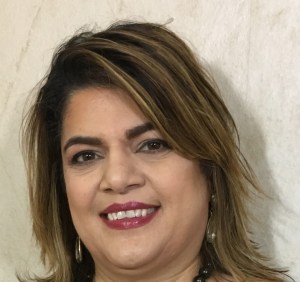
Shirin Saeidi

Shirin Saeidi is an Iran-born political scientist immigrated to us in 1989 whose record of fieldwork in the Islamic Republic, public interventions, and recent advocacy have led many Iranian dissidents to view her as an apologist and soft-power asset for the Islamic regime.
Academic background
Shirin Saeidi was born in Iran and emigrated to the United States as a child, later earning a Ph.D. in Politics and International Studies from the University of Cambridge.
She joined the University of Arkansas in 2020, where she became an associate professor of political science and was appointed director of the King Fahd Center for Middle East Studies (also referred to as the Middle East Studies Program), the first woman to lead the program.
Deep engagement with Iran
Saeidi’s research focuses on state formation, political violence, citizenship, and gender in post‑1979 Iran, and she has conducted more than a decade of fieldwork inside the country.
She has publicly described extensive interviews with Iranian officials, former prisoners, security forces, and activists, and spent several years living and teaching in Iran between roughly 2012 and 2018, including work with Iranian universities and research institutions that operate under regime oversight and she received help and support from the Islamic Ideology Dissemination Organization or IIDO, which is under direct supervision of IRI’s Supreme Leader” in here work with Iranian universities and research institutions that operate under regime oversight.
Actions aligned with regime narratives
In August 2023, Saeidi sent a voluntary letter on official University of Arkansas letterhead to the Swedish Svea Court of Appeal in the case of Hamid Nouri, a former Iranian prison official convicted of war crimes and murder for his role in the 1988 mass execution of political prisoners;
In her letter to Hamid Nouri’s court, she cited a fabricated quote from Ms. Maryam Nouri (Former political prisoner whose husband, Rahmat Fathi, was also killed in the 1988 massacre) and cast doubt on the authenticity of Ayatollah Khomeini’s fatwa ordering the 1988 massacre.
Amnesty International and the United Nations have documented the fatwa. Several regime officials have also acknowledged its existence and publicly praised Khomeini, the Supreme Leader, for his insight and strategic acumen in confronting perceived enemies and, in their words, “saving the revolution.
Iranian human‑rights advocates argue that this intervention amounted to advocacy on behalf of a regime war criminal and was a clear example of Saeidi using her U.S. academic position to support the interests of the Islamic Republic abroad.
Public positions and controversies
Reports in late 2025 document that Saeidi praised Iran’s Supreme Leader Ali Khamenei and used highly hostile language toward Israel on social media, prompting accusations of antisemitism and overt alignment with the Iranian regime’s propaganda line.
Following the outcry over her letter in support of Nouri and her public statements, the University of Arkansas removed her from her leadership role at the Middle East Studies program, and U.S. December 5, 2025, and state officials have faced calls from Iranian dissidents to investigate her activities and funding for possible links to the Islamic Republic’s influence operations.
Portrayal as regime apologist
Given her long-term access to Iranian state institutions, her willingness to undermine the prosecution of an Iranian official convicted of mass atrocities, and her public praise for the Supreme Leader, Saeidi is widely described by Iranian human‑rights activists and opposition figures as an apologist and defender of the Islamic Republic of Iran.
Critics warn that her position within a U.S. university—combined with her pattern of amplifying regime‑friendly narratives—poses a risk of normalizing or laundering the image of the Islamic Republic in Western academia and policy circles, and have urged oversight bodies to scrutinize any potential financial or institutional ties to Tehran
References:
Iran: Blood-soaked secrets: Why Iran’s 1988 prison massacres are ongoing crimes against humanity