End the Safe Haven for Iran’s Ruling Elite Networks: No Privilege Without Accountability
The Alliance Against the Islamic Regime of Iran Apologists (AAIRIA) calls for immediate and rigorous scrutiny of the networks through which the Islamic Republic of Iran’s ruling elite project their power, privilege, and illicit wealth abroad.
For decades, the Islamic Republic of Iran has sustained itself through repression, corruption, and the systematic denial of basic rights to its own people. While ordinary Iranians endure economic hardship, censorship, imprisonment, and violence, those connected to the regime’s leadership have often enjoyed access to opportunities, education, and freedoms in Western democracies.
This contradiction is not incidental. It is structural.
Authoritarian systems do not operate through isolated individuals. They rely on networks of power that extend beyond borders, often involving family members and close associates who benefit from and, at times, facilitate the movement of wealth, influence, and privilege. In many cases, these networks serve as conduits for assets, access, and legitimacy abroad.
The United States and its allies already possess the legal framework to address this reality. Under the Global Magnitsky Act and related authorities, individuals involved in or benefiting from serious human rights abuses and large-scale corruption can be denied entry, sanctioned, and cut off from financial systems. In addition, legislative efforts such as the Mahsa Act reinforce the obligation to systematically identify and sanction senior Iranian officials and entities responsible for repression, ensuring that accountability is continuous rather than reactive.
AAIRIA therefore calls for:
- Enhanced scrutiny by the U.S. Department of State and Department of Homeland Security of individuals closely connected to senior Iranian officials, where credible concerns of corruption, money laundering, sanctions evasion, or facilitation of regime interests exist
- Full enforcement of existing laws, including Magnitsky-style sanctions and the mandates envisioned under the Mahsa Act, where evidence demonstrates involvement in or benefit from illicit activities
- Closing enforcement gaps that allow corrupt systems to externalize wealth and privilege through family networks while evading accountability
This is not a call for collective punishment. It is a call for consistency, integrity, and accountability.
Access to Western education, financial systems, and residency is a privilege grounded in the rule of law. It cannot coexist with the unchecked transfer of benefits derived from repression and corruption.
The Iranian people have paid the cost of this system for decades. It is neither just nor sustainable for its beneficiaries to remain insulated from its consequences while enjoying the freedoms denied to others.
Accountability must be targeted, evidence-based, and enforceable. But it must also be real.
AAIRIA stands for a simple principle: Those who sustain or benefit from systems of repression should not be able to shield themselves behind borders, intermediaries, or family networks.
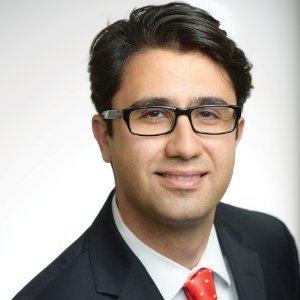
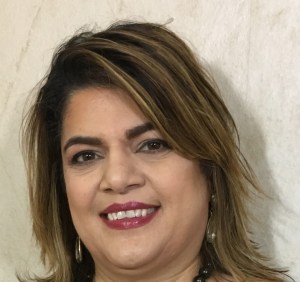
- Dr. Fatemeh Larijani – Daughter of Ali Larijani, a long-time senior figure in the Islamic Republic who has served as Speaker of Parliament, Secretary of the Supreme National Security Council, and advisor to the Supreme Leader; affiliated with Emory University Hospital. (Expelled by Emory University and went back to Iran January 2026)
- Eissa Hashemi – Son of Masoumeh Ebtekar, former Vice President of Iran and spokesperson for the 1979 U.S. Embassy hostage-takers; Adjunct Faculty at The Chicago School of Professional Psychology, Los Angeles. (Arrested on April 11, 2026 by the Homeland Security and will be deported to Iran )
- Leila Khatami – Daughter of Mohammad Khatami, who served as President of the Islamic Republic of Iran for eight years (1997–2005), as well as Minister of Culture and Islamic Guidance, member of Parliament, and a senior figure within the regime’s political and ideological structure; faculty member at Union College, New York.
- Dr. Fatemeh Noohi Bezjani – Daughter of Kobra Khazali, a senior Islamic Republic official and prominent advocate of compulsory hijab policies; affiliated with the U.S. medical sector.
- Ehsan Noohi Bezanji – Son of Kobra Khazali, senior Islamic Republic official involved in state policy on women and family; based in the United States.
- Narges Nouri – Wife of Ehsan Noohi Bezanji; works at Google; connected through marriage to the Khazali family network.
- Zeinab Hajjarian – Daughter of Saeed Hajjarian, a key intelligence strategist and one of the principal architects of the Islamic Republic’s security and intelligence structures.
- Yahya Tousi – Son-in-law of Ayatollah Seyed Ali Ghazi Asgar, a senior clerical figure within the Islamic Republic; Assistant Professor at the University of Minnesota, Minneapolis.
- Zahra Takhshid – Granddaughter of Ayatollah Mohammad-Reza Mahdavi Kani, former head of the Assembly of Experts and influential cleric; affiliated with the University of Denver Sturm College of Law.
- Ehsan Nobakht – Son of Ali Nobakht (former head of the President’s Office in Iran) and nephew of Mohammadbagher Nobakht (former Vice President and government spokesperson); Associate Professor of Medicine at George Washington University.
- Zahra Mohaghegh Damad – Niece of Ali Larijani and daughter of Ayatollah Seyed Mostafa Mohaghegh Ahmadabadi, a senior cleric; Assistant Professor at the University of Illinois Urbana-Champaign.